
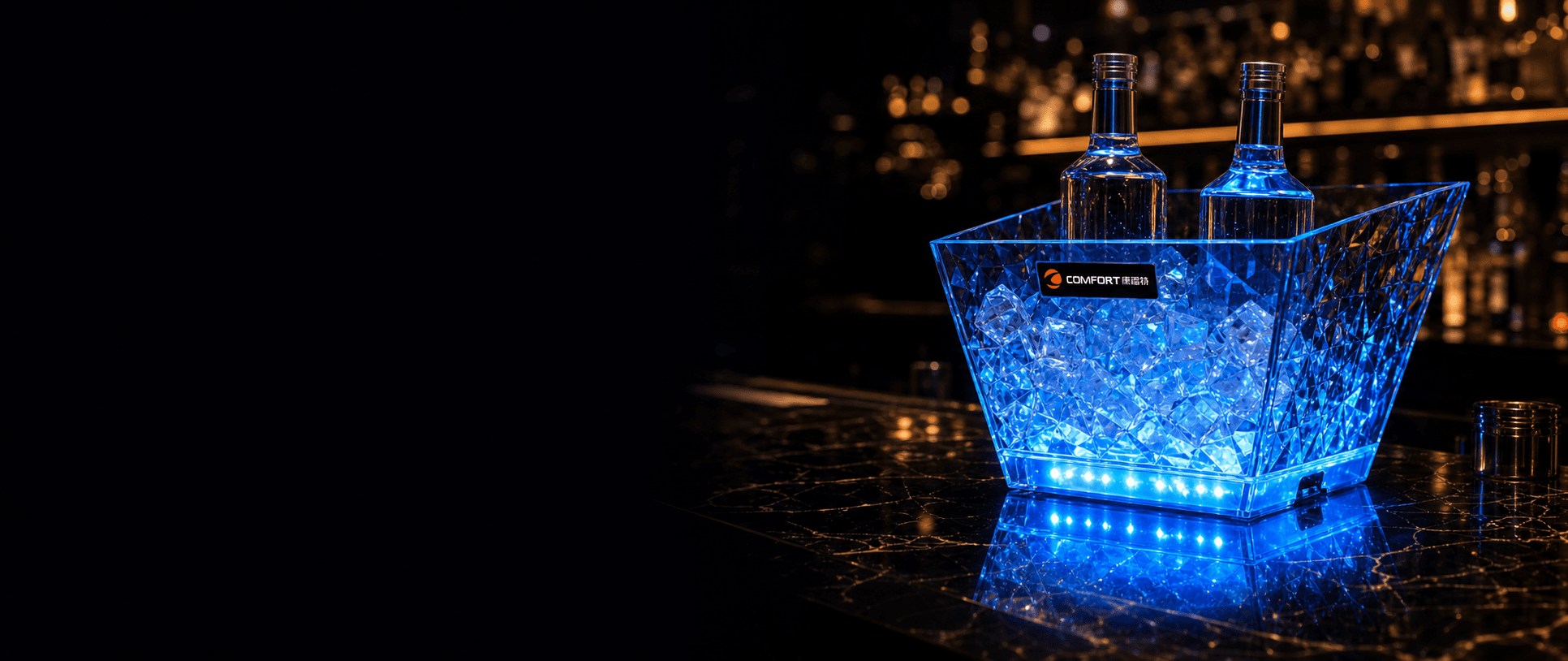
Short answer: A suitable custom LED ice bucket is selected by bottle fit, usable capacity, material, lighting effect, battery configuration, logo process, operating environment, packaging and destination-market documentation—not appearance alone.
LED ice buckets combine three products in one: a beverage cooler, a branded promotional item and an electronic assembly. This guide explains the specification, sample approval and shipment inspection process our team uses when supporting liquor brands, promotional agencies, importers, distributors and hospitality buyers.
Procurement note Product specifications and regulatory requirements vary by model and destination. Request documentation for the exact configuration you intend to buy.
01 · Define the brief
Start With the Application, Not the Catalog Photo
A nightclub activation may prioritize brightness, logo visibility and resistance to frequent handling. A hotel terrace may need restrained lighting and simple cleaning. A supermarket display may value long operating time and intuitive controls. Define the venue, beverage, bottle count, operating hours, quantity, destination and delivery date before requesting prices.
02 · Capacity
Check Usable Bottle-and-Ice Space
Nominal liters do not tell the whole story. Wall thickness, taper, handles and the light module affect usable space. Two buckets with the same stated volume may load differently.
Run a realistic bottle-fit test
Load the exact bottle style and intended quantity, add ice to the planned service level, and check label visibility, handle clearance, lifting stability, switch exposure and logo visibility. Photograph the loaded sample from the customer viewing angle.
03 · Materials
Choose Material for the Real Use Environment
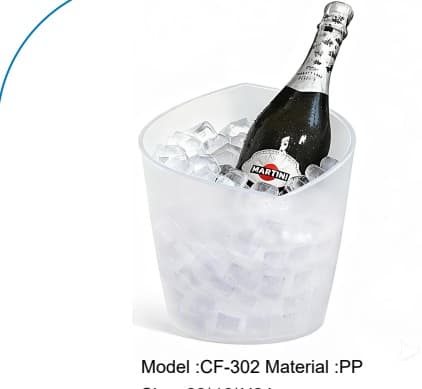
PP
Lightweight and practical for frequent handling. Check wall stiffness, surface consistency and scratch behavior.
PS & clear plastics
Strong optical presentation. Inspect haze, flow marks, scratches and stress around handles or assembly points.
Mixed construction
A clear upper body with a removable electronic base can improve light distribution and servicing.
If the product may contact ice, beverages or utensils, discuss the exact contact scenario and destination-market requirements. A generic material statement should not be treated as finished-product compliance.
04 · Electronics
Specify Lighting, Battery and Charging Conditions
“RGB” does not define brightness, uniformity, runtime or control behavior. A quotation should identify the light source, LED location, color modes, programs, control method, operating-time test condition, charging time, charger rating and plug type.
Test the sample in both a dark hospitality environment and a moderately lit retail space. For lithium-battery shipments, coordinate classification, packaging and carrier requirements with a qualified freight forwarder.
05 · Brand execution
Select a Logo Process That Fits the Surface
Screen printing, pad printing, heat-transfer decoration, applied badges and laser marking suit different materials and geometries. Confirm whether the area is flat or curved, the number of colors, off-state visibility, and how condensation and repeated wiping affect the finish.
The approved sample record should include artwork version, print size, color reference, position measurements and photographs. A restrained logo above the ice line may look more premium and remain more visible than oversized artwork.
06 · Quality control
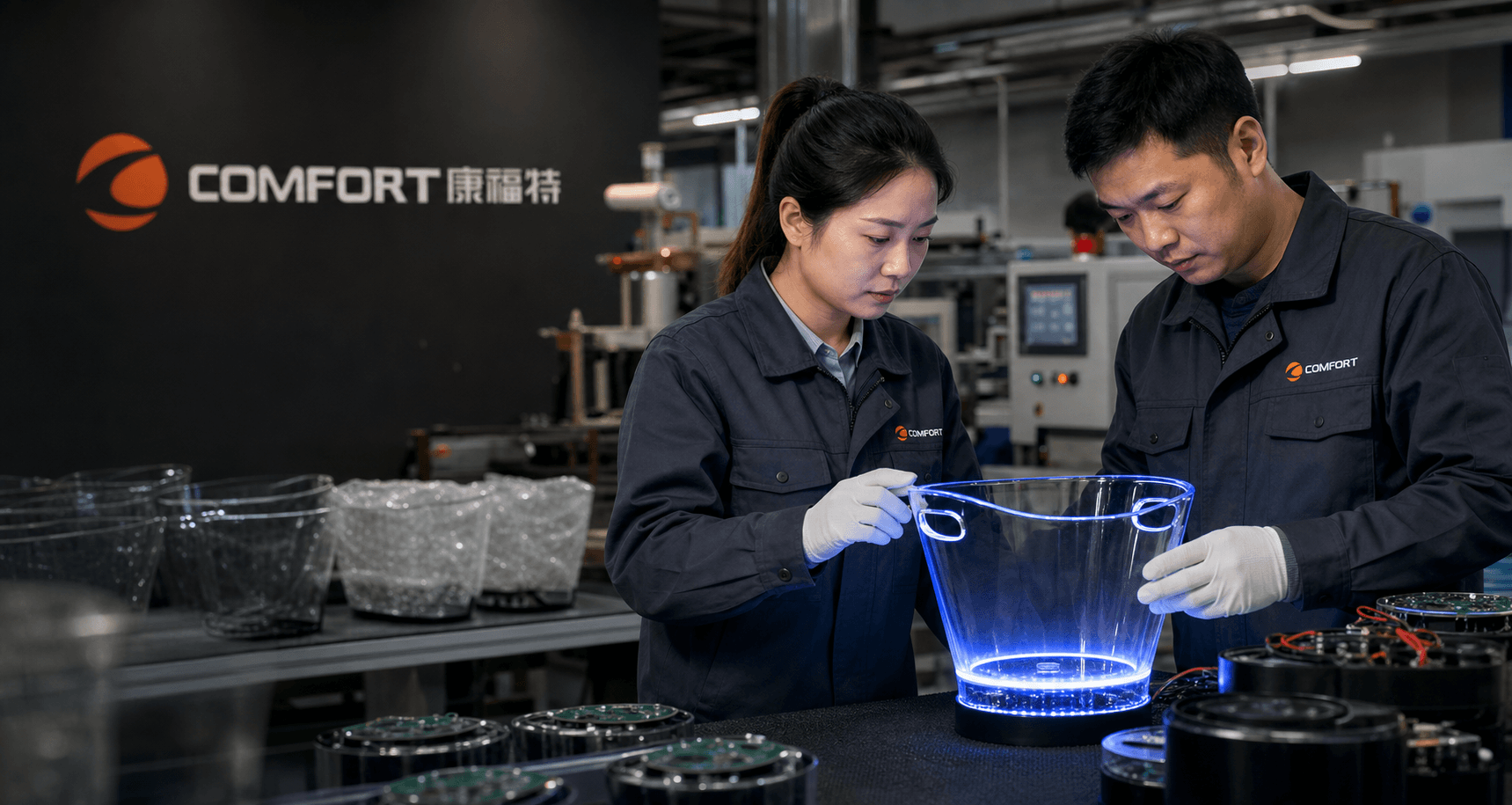
What Factory Testing Should Cover
Appearance & assembly
Model, material, color, logo, surface, handles, joints, removable base and stable placement.
Functional inspection
Power, light modes, controls, charging indication, runtime samples and design-appropriate water checks.
Shipment inspection
Random samples, signed-sample comparison, quantity, accessories, regional plugs, labels and corrective actions.
07 · Export protection
Packaging Is Part of Product Performance
Clear bodies, painted surfaces and electronic bases can be damaged during transit. Review protective film or bags, fitted inserts, accessory separation, instruction language, carton size and weight, shipping marks and pallet requirements. Request a packed-sample photograph before mass production.
08 · Request for quotation
A Practical RFQ Checklist
If a detail is unknown, write “supplier recommendation required.” That produces a clearer quotation than leaving a silent assumption.
Buyer questions
Frequently Asked Questions
How long does a rechargeable LED ice bucket operate?
Runtime depends on battery capacity, LED load, brightness, lighting mode, temperature and battery condition. Ask for documented test conditions and verify a production-representative sample.
Can an LED ice bucket be used outdoors?
Only when the exact electrical design is suitable for the expected exposure. Define rain, splashing, temperature and charging conditions instead of assuming waterproof performance from appearance.
What is the typical MOQ for a custom LED ice bucket?
MOQ depends on the platform, logo process, color, electronics and packaging. Many standard catalog models start around 500 pieces, but the exact configuration must be confirmed.
Can the LED color match a beverage brand color exactly?
Lighting can be adjusted, but emitted light differs from printed color. Approve a physical sample in the intended venue rather than relying only on digital color values.
What files are needed for a custom logo?
Vector artwork is preferred, together with color references, print dimensions, placement instructions and the brand guide when available.
Conclusion
Turn the Campaign Brief Into a Production Standard
The best custom LED ice bucket fits the beverage, venue, operating schedule, brand standard and shipping plan. Approve a physical sample, document test conditions and use the same evidence during shipment inspection.